
shell
ผู้เยี่ยมชม
benducket3211@gmail.com
Can a 3D Microscope Transform Scientific Observation and Research? (10 อ่าน)
4 เม.ย 2569 14:31
The world of microscopy has evolved dramatically, and the 3D microscope has become a revolutionary tool for scientists, engineers, and researchers. Unlike traditional microscopes, which offer flat, two-dimensional views, a 3D microscope allows users to explore samples with depth perception, bringing structures and surfaces to life. This advanced imaging technology provides clarity, precision, and a more realistic understanding of materials, making it essential in fields such as biomedical research, electronics inspection, material science, and industrial quality control.
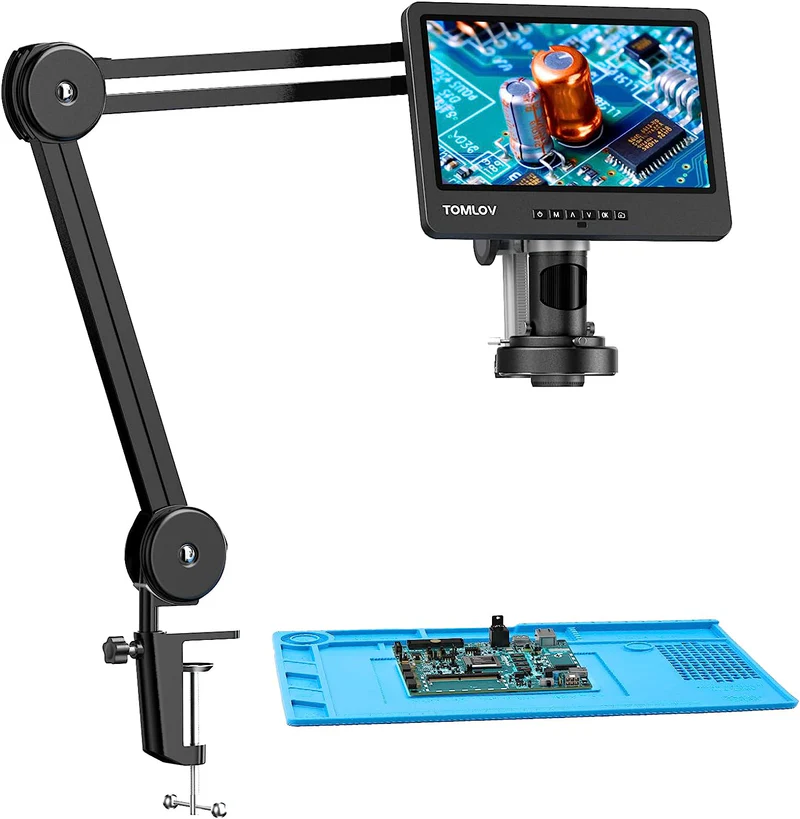
A 3D microscope enables detailed visualization of intricate textures, complex geometries, and minute surface irregularities. From observing the layered structures of biological specimens to examining microelectronic circuits, the device enhances accuracy and efficiency. By capturing three-dimensional data, researchers can analyze objects in multiple dimensions, improving their ability to measure, manipulate, and document specimens. The integration of digital imaging and software analysis further elevates the capabilities of a 3D microscope, enabling precise measurements and high-resolution imaging.
Can Advanced Features Enhance the 3D Microscope Experience?
Modern 3D microscopes come equipped with advanced features designed to improve usability and observation quality. High-definition optics, adjustable zoom, and stereoscopic imaging provide depth perception and detail that traditional microscopes cannot achieve. LED illumination and multiple lighting techniques enhance contrast, revealing subtle differences in texture, color, and surface topology. Some models incorporate digital connectivity, allowing live streaming, 3D rendering, and precise documentation of findings, which is particularly valuable for research presentations, teaching, and collaborative projects.
In industrial applications, a 3D microscope allows detailed inspection of microchips, printed circuit boards, and small mechanical components. Engineers and quality control professionals can detect defects, evaluate surface finishes, and ensure production standards with greater accuracy. The ergonomic design and user-friendly software of contemporary 3D microscopes also make long observation sessions comfortable, reducing eye strain and fatigue. These features collectively transform the microscopy experience, making it more efficient, reliable, and insightful.
Can a 3D Microscope Improve Research Accuracy and Efficiency?
Accuracy and efficiency are paramount in scientific research, and the 3D microscope plays a vital role in achieving these goals. By providing a three-dimensional perspective, researchers can observe complex structures from different angles, gaining a comprehensive understanding of the specimen. In biological research, this capability allows for precise examination of cell morphology, tissue layers, and microstructures without the need for invasive techniques. For material scientists, a 3D microscope provides critical insights into surface defects, coatings, and microfractures that influence product quality and performance.
Additionally, digital 3D microscopes enable precise measurements and image analysis, reducing human error and increasing reproducibility in experiments. The ability to store, manipulate, and share 3D images ensures that data can be reviewed and validated collaboratively. In industrial and scientific settings, these advantages translate into improved decision-making, faster problem-solving, and enhanced research outcomes.
Conclusion: A 3D Microscope Redefines Observation and Analysis
The 3D microscope is more than a magnifying device; it is a powerful tool that redefines observation, research, and quality analysis. By providing three-dimensional views, advanced imaging capabilities, and digital integration, it allows scientists, engineers, and researchers to explore objects with unprecedented clarity and precision. From enhancing scientific understanding to improving industrial inspection and quality control, a 3D microscope transforms how professionals interact with micro-scale structures. Investing in a high-quality 3D microscope opens new possibilities for innovation, discovery, and excellence in both scientific and industrial fields.
43.242.177.63
shell
ผู้เยี่ยมชม
benducket3211@gmail.com