
gnx
ผู้เยี่ยมชม
benducket3211@gmail.com
Are Digital Microscopes Changing Modern Research Techniques? (50 อ่าน)
20 ธ.ค. 2568 22:54
Digital microscopes have revolutionized the way scientists, educators, and hobbyists observe microscopic structures. Unlike traditional optical microscopes,digital microscopes integrate high-resolution cameras and computer interfaces to provide detailed visualizations of specimens. This combination of optics and digital technology enhances analysis, documentation, and sharing of findings, making them indispensable tools in laboratories, classrooms, and industrial inspection.
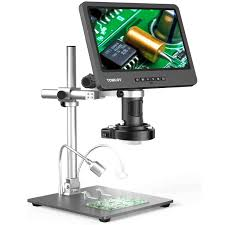
high-resolution imaging for clear observations
One of the main advantages of digital microscopes is their ability to capture high-resolution images. Advanced sensors allow users to observe fine details with clarity, which is particularly useful in fields like biology, electronics, and material science. The ability to zoom in and adjust magnification digitally enables precise examination of specimens without the limitations of traditional optical lenses. Researchers can capture still images or videos for further analysis, documentation, and presentations.
ease of use for education and training
Digital microscopes are highly accessible and user-friendly, making them ideal for educational purposes. Students can connect the microscope directly to a computer, tablet, or monitor, allowing multiple viewers to observe the specimen simultaneously. Interactive features, such as measurement tools and annotation capabilities, enhance learning and engagement. The convenience of digital interfaces reduces the learning curve for beginners while providing advanced functionalities for experienced users.
versatility in professional applications
Beyond education, digital microscopes are widely used in professional and industrial applications. In electronics, they assist in inspecting circuit boards, soldering quality, and component defects. In biology and medical research, they allow detailed study of cells, tissues, and microorganisms. Material scientists and engineers use digital microscopes for quality control, surface analysis, and failure investigations. Their adaptability makes them valuable tools across multiple disciplines.
ergonomic design and flexible connectivity
Modern digital microscopes are designed with ergonomics and connectivity in mind. Adjustable stands, tilting heads, and compact designs enhance comfort during prolonged use. Connectivity options, including USB, HDMI, and Wi-Fi, allow users to easily transfer images and integrate with analysis software. These features improve workflow efficiency, enabling real-time observation, remote collaboration, and accurate data recording.
digital enhancements and software integration
Software integration sets digital microscopes apart from traditional models. Built-in measurement tools, image stacking, and 3D reconstruction allow users to analyze specimens with precision. Annotation and reporting tools streamline documentation, while image processing software enhances clarity and detail. These digital enhancements increase accuracy, facilitate research, and enable better communication of findings in professional and academic settings.
portability and compact models
Many digital microscopes are designed to be portable, allowing easy transport between classrooms, labs, or field sites. Compact models can be handheld or lightweight, making them convenient for on-the-go inspections. Portability does not compromise functionality, as even smaller models maintain high-resolution imaging and digital enhancements. This flexibility broadens their usability in research, education, and industrial applications.
cost-effectiveness and accessibility
While high-end digital microscopes can be expensive, many affordable models provide excellent value for students, hobbyists, and small laboratories. Their versatility, ease of use, and integration with digital tools make them practical investments. Users benefit from efficient workflow, accurate data capture, and the ability to share observations instantly, which outweighs the initial cost.
environmental and ergonomic benefits
Digital microscopes reduce the need for physical slides and repeated specimen handling, minimizing material waste. Ergonomic designs and adjustable viewing angles prevent strain during extended observation sessions. Many models also feature energy-efficient LED lighting, reducing power consumption while providing consistent illumination. These aspects make digital microscopes environmentally friendly and comfortable for prolonged research activities.
conclusion on digital microscopes
Digital microscopes combine advanced optics, high-resolution imaging, and interactive software to transform the way specimens are observed and analyzed. Their accessibility, versatility, and digital enhancements make them ideal for education, research, and industrial applications. By offering portability, ergonomic design, and seamless connectivity, digital microscopes enhance precision, efficiency, and collaboration, establishing themselves as essential tools in modern scientific exploration.
43.242.176.34
gnx
ผู้เยี่ยมชม
benducket3211@gmail.com
lhazelk
ผู้เยี่ยมชม
lhazelk@gmail.com
6 ม.ค. 2569 19:47 #1
Take this Daytona ref. 116520, the final frontier of non-ceramic, steel bezel Daytona watches. link This example of the watch is significant because it not only makes this the last of the steel bezel models but also the first with in-house link automatic chronograph movements which is very significant in the history link of the brand. With this signature black dial, polished center links on the bracelet, and pitch-perfect 40mm sizing, this is as***d as it gets from this generation of Daytona.
142.249.37.58
lhazelk
ผู้เยี่ยมชม
lhazelk@gmail.com